
These are books that I came across in a serendipitous way, or that I feel lucky to have encountered, because I don't see them recommended as often as I think they should be. I enjoyed all of them a great deal, and I'm hoping this little list will be a source of serendipity for you.
Disclaimer: I don't have a particularly good sense for how popular particular books are, so I can't say for certain that these are lesser-known. But I'd be surprised if anyone else has read more than 10% of the books on this list. If you've read more than a tenth of these, we should be friends! — Michelle Fullwood

I am still working through Michael Gilbert's oeuvre, but this first book of his that I've read remains his best in my opinion. This book centres around the grisly discovery of the body of a solicitor in one of his firm's locked deed boxes. The characters, though many, were well-sketched, among them multiple top-notch sleuths both professional and amateur.
I will warn that the secretaries in this firm suffer from routine sexual harassment, which is not great, but the rest of the book is very funny and a blast to read.

I have no idea how I came across Caudwell's mysteries but I'm so glad I did. This is an unusual and erudite mystery that gets solved entirely long-distance via engagingly-written letters and a spot of proxy interviewing. The very dry British humour will either work for you or not. Textual criticism is a key to the solution, which really appealed to me. There are three more books in the series.
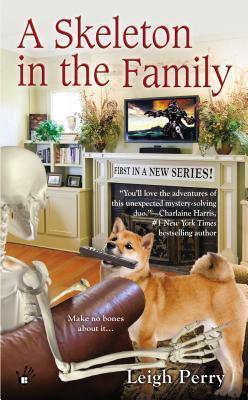
This is a cosy mystery series, featuring Georgia, an adjunct professor, and Sid, a walking, talking skeleton. That is the only paranormal element to the series (although they do make creative use of Sid's skeletonicity). Everything else is strict, logical sleuthing. All the books in this series are fun reads, and contain some trenchant observations on the adjunct life.

The new owner of a house discovers a "priest hole" in his house, and the 200-year-old skeleton of a boy inside. The police don't care to investigate, so he does. A gentle, old-fashioned puzzle you can solve yourself as you read along.

This was a divisive read in the book club I read it in, but I really loved it. While it's sometimes labelled as crime, it's more of a morality play in the form of a novel. We know from the beginning that a Cornish cliff is going to collapse on top of a hotel, burying some of its occupants, but which ones?
There is a huge cast of characters, but so well-drawn that it's easy to keep track of them all. The sunny seaside atmosphere builds in dread as the day of the disaster approaches, yet there are touches of humour that keep it light and eminently readable.

There is no better escapism than Mary Stewart's romantic suspense novels. Always set in lovely, atmospheric parts of the world (for example, Crete in this book) and featuring adventurous heroines that aren't too perfect, we get a rollicking adventure with a dash of mystery and romance on the side.
I will admit that her oeuvre is slightly uneven, but even her poorer efforts will reliably take you out of yourself for a couple of hours when you really need it. This is one of my favourites of hers, and Wildfire at Midnight and Airs Above the Ground are two others that I enjoyed very much.

Probably one of the most widely-read books on this page. I was tempted to include it in a funny mystery category, but it's also a romance, set in 1800's Egypt, and so I included it here. Written by an actual Egyptologist (real name Barbara Mertz), the book portrays very well the romance and drudgery of an Egyptian archaeological dig. Amelia Peabody is a larger-than-life heroine whose forceful nature is a welcome change from the usual depictions of Victorian women. I've read most of the series and enjoyed it.

A memoir by a young woman who gets herself hired onto a dig at Tell el-Amarna, the capital of the heretic pharaoh Akhenaten, in 1930. Her romantic notions are soon tempered by the day-to-day drudgery of the dig, but her sheer joie-de-vivre sustains her and the book. John Pendlebury, though not fully named, is the leader of the expedition, and we get an interesting look at this war hero (with his one glass eye) in his natural habitat.

Get through a few chapters of this book and you'll be equipped to read the first couple of lines of the Offering Formula. This formula is so common that every museum with an Egyptian section will have at least one artifact containing it, so you can experience the excitement of reading an artifact from millennia ago.

Bill Manley of Collier and Manley just above, also has this second textbook with a refined approach to teaching hieroglyphs. I felt the first chapter was more of a slog than any part of Collier and Manley, but the rest was great, with one artifact per chapter to decipher. Where I really recommend this one is when you're coming back to Hieroglyphic Egyptian after a hiatus — it's great to use to review!
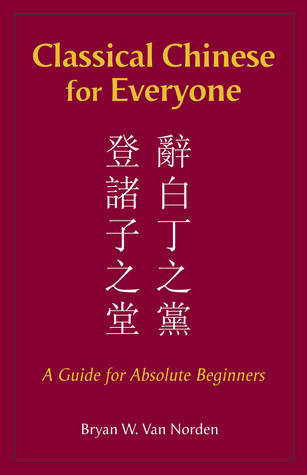
This book is not dissimilar to Collier and Manley. Written by a philosopher, it's focused on giving you just enough Classical Chinese grammar patterns to get you to reading the simpler Confucian analects. Despite the title, I think it would be best to have some Chinese under your belt before tackling this. I derived a huge amount of enjoyment both from deciphering the texts, and seeing how much the language has changed. Who would have guessed that 是 was once a resumptive pronoun rather than a copula?

Beginner linguists cut their teeth on identifying patterns in a variety of foreign languages. This book brings such exercises to a general audience, with fun puzzles from Irish to Tok Pisin. If you are a teen who finds such puzzles fun or even easy, check out Linguistics Olympiads!

I love doing crosswords, but sometimes the same old crosswordese can get stale. This book breathes fresh air into the genre. All the vowels have been removed, so you can cram much longer words and phrases into the grid. I wish there could be a never-ending supply of vowelless crosswords for me to solve.

I "discovered" this book at a tiny bookshop in Budapest that sustained me with second-hand English books while I was studying maths there for a few months. Both this and its companion book The Blue Nile were gripping reads about the respective journeys to the sources of the Nile in the 19th century. Peter Hopkirk's books on Central Asia were another discovery from the Red Bus Bookstore, and I recommend those too.

Many history books that "read like a novel" are essentially creative non-fiction, reconstructing conversations and so forth. This book about the rise of Genghis Khan and the subsequent history of the Mongol Empire reads like a novel by dint of sheer interestingness and wonderfully paced prose.

One of my most re-read non-fiction books, this memoir of a codemaker for the Special Operations Executive, has it all: espionage, humour, cryptography, poetry. We get to meet some of the most famous spies of WWII through the eyes of someone painfully young yet responsible in his own domain for their safety. There is one passage in the book I still puzzle over almost 20 years after reading it for the first time.

A biography of Lord Woolton, the Minister of Food for the UK during World War II. I came to know of this book through a Twitter thread on how the UK bought up the entire free world's supply of tea in 1942 to secure the supply chain, a story which sadly wasn't actually recounted in this book. It was admittedly dry, but the description of just how wide-ranging and detailed and well-executed the plans for feeding an island nation had to be, and how close Britain came to disaster on this front, stayed with me long after I finished reading. It made me wonder: who is doing the thinking and acting necessary to secure the food supply of future Earth, in the face of all our challenges due to climate change?

More mysteries? Definitely! The second entry by Michael Gilbert on this page, this locked room mystery is based on the author's experience in a World War II prison camp. While not in the least a traditional mystery, the sleuthing undertaken by our "detective", a POW, was admirable in his resourcefulness and persistence under extremely trying circumstances.

ECR Lorac is another mystery author whose oeuvre I'm working through. This one is set during the Blitz and the blackout very much plays a role in the murder and investigation that takes place. Since it was written during the war, it feels very immediate and atmospheric, similar to Christianna Brand's Green for Danger (not included in this list just because I think that book does receive its just laurels).

A grittier version of the classic Disney children's film Bedknobs and Broomsticks, a girl with a club leg who's been neglected and abused all her life gets evacuated to the countryside, and starts to find her real family there. It felt very psychologically real and magical. The story concludes in its sequel, The War I Finally Won.

I found this book fascinating and it launched me down the rabbit-hole of Biblical criticism. This investigation into the origins of the first five books of the Hebrew Bible, with its careful attention to subtle details in the text, read almost like a detective story. My understanding is that his interpretation is broadly the consensus view of scholars, but that there are quibbles about the details.
REF has a further book The Exodus which is even more fun (and even more speculative).

Another book featuring Biblical sleuthing via close reading, this time looking at the tales of Kings Saul, David, and Solomon, and the subtle (and not-so-subtle) hints they make towards a less than salubrious past for the otherwise glorious King David. Baden postulates multiple layers to the text, with different motivations and narrative requirements for the author of each layer. This was a fun read with jaw-dropping conclusions.
I should emphasise that this is a fairly controversial take. For another, to me just as plausible, theory, see Israel Finkelstein and Neil Silberman's David and Solomon: In Search of the Bible's Sacred Kings and the Roots of the Western Tradition.

An interesting take on how art can be co-opted by totalitarianism but also subvert regimes, using the lens of the story of King David. Heym's theory is essentially similar to Baden's above, but subtly different explanation for the Davidic apologetics, postulating that a historian may have been commissioned to write David's history, but manage to subtly insert the truth. And pay the price.
If you enjoy this, also consider Paul M.M. Cooper's Rivers of Ink which has similar themes but is set in ancient Sri Lanka.

If you enjoyed books like The Martian or Project Hail Mary you'll probably like this historical fantasy set in a Constantinople-like city. The main character, Orhan, is an engineer (and an unreliable narrator), who winds up becoming the leader of the city and having to protect it against a barbarian siege. Besides the engineering problems he has to solve, he also has to figure out how to bring the city together and combat racism.

Nevil Shute's most famous work is A Town Like Alice, which is also all about solving problems, but this lesser-known book deserves to be widely read as well. As with that earlier book, you'll have no idea where the story is going to end up, but there'll be many problems, engineering or otherwise, to solve along the way. But it's also a meditation on what it means to live a good life. What may seem humdrum to one person may be exactly what someone else is looking for, and this book shows that someone, by purely doing what they love, can have a wider impact than they or anyone else might imagine.

Norton Juster is better known for his masterpiece of wordplay, The Phantom Tollbooth (which I also adore), but this book shows that Juster, true to his architectural roots, is equally adept at manipulating simple 2-dimensional objects to tell a wonderful story.

Suppose you're a person who's always busy with your family and good works — so busy you don't have time to reflect on yourself or, really, other people. And then suppose you're put in the middle of nowhere with no one to talk to and no way to occupy yourself. What will you find? And then, more crucially, what will you do about your new self-knowledge? An astonishing novel with basically just one character, yet captivating.

The creator of Winnie the Pooh was also a fan of detective mysteries, and he produced this one for our reading entertainment. It is perhaps a tad too easy to solve, but it's amazingly fun to read. Afterward, Milne decided that it was more fun to read mysteries than to pen them, so this is his sole effort in the genre — a gift to his fellow fans.

I thought I'd got through all of Sayers' mysteries when I finished her Lord Peter Wimsey series, but I had overlooked this standalone mystery, co-written with Robert Eustace. It does start out slow with an exchange of letters, but it quickly becomes very suspenseful. Eustace's science + Sayers' theology + Sayers' literary abilities make for a terrific combination. One part of this book I audibly gasped at.

This is the "Larry" of Gerald Durrell's My Family and Other Animals and other books. While his Alexandria Quartet and Avignon Quintet are his famous works, this collection of short stories told by a British diplomat stationed in the Balkans is a hidden gem. The stories are all funny, and a couple of them uproariously so.

Wodehouse's Jeeves and Wooster and Blandings books tend to be more widely read, but I think Leave it to Psmith, which is actually set at Blandings Castle, is one of his funniest works. I'd loved the irrepressible Psmith since reading Mike and Psmith, but watching him trying to find employment and then love was a hoot.
I read the author's Great Brain children's books as a kid, which is set in frontier-town Utah. This is similarly semi-autobiographical, aimed at adults instead. We learn more about the parents, their inter-faith marriage, and how the children grew up. It was just a really fun, transporting read.

I don't know if this one of those everyone-else-knew-about-this-other-than-me? books. Possibly it was being brought up outside of the U.S. that led me not to encounter this book until just a couple of years ago. But this children's book. Was. Fantastic!!! Hilarious, dry, slightly mockumentary style, with frequent callbacks to earlier parts of the book. The illustrations were also charming and added to the strong sense of place.

Somewhat overshadowed by the more well-known Monster at the End of This Book, from the same series, but even better! Will get even adults musing on how to make a taxonomy of the universe, while laugh-out-loud funny at the same time.

A bear goes searching for his lost hat. Perfect in its simplicity and sly humour.

Written around the same time as the Tintin space books Destination Moon and Explorers on the Moon and featuring about the same level of technological accuracy (that is to say, not much), and with a cat as astronaut in place of Snowy. This was so charmingly illustrated and such a delightful book though!

A sweet tale of a real-life cat orphaned in World War II who finds his place in life as the resident cat of Faber & Faber, the London publishers. A tribute to the importance of cats for writers and other book people.

A fun children's mystery with the laugh-out-loud narratorial voice of Ra the Mighty — Cat Detective.

A housecat stands his ground among his bigger, scarier relatives. A great way for children to learn about the big cats and about what it means to belong.

A slice-of-life manga series about women's lives in 19th century Central Asia. I cannot emphasise enough how gorgeously illustrated these books are. Some of the stories are also really compelling. Book 6 has been my favourite so far.
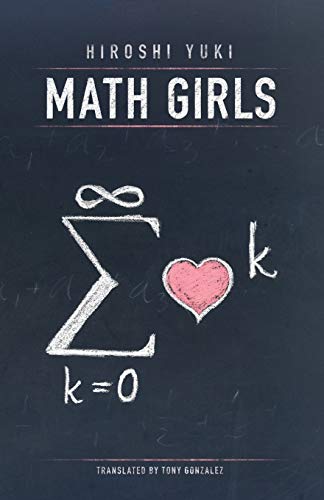
There's a publishing dictum that for every equation you include in a book, you decrease your potential audience by half. Perhaps that's why this story-based introduction to mathematics came out in Japan rather than the West. I absolutely loved this and I was astonished at the level of maths that we got to in this volume (the Riemann-Zeta function and generating functions!).

The premise of this manga is that dinosaurs were found on a remote Japanese island and that they are now being bred in captivity around the world, including one particular Japanese dinosaur sanctuary, which has been struggling since a horrible accident marred the image of dinosaur parks. A fun manga combining paleontology and practical zoology, featuring earnest and competent characters. There's a throughline about an ancient tragedy and a possible slow-burn relationship as well. The illustrations are lovingly detailed and informed by a modern paleontologist consultant. I wish this place existed!

This is one of the weirdest-looking books in my library, and doesn't actually require much Japanese to appreciate. Basically it takes various animals and portrays what humans would look like if they had evolved in the same way. For example, as per the title, the turtle's shell actually evolved from a rib cage — so the illustration shows what a human would look like if our rib cage had evolved the same way. A fun way to learn about evolutionary anatomy!

So many travel books are written from the Western perspective. This is unusual in both its location — Western Sahara in the 1970s — and its author — a Taiwanese woman writer. We get stories that are adventurous, magical, some deeply uncomfortable, but together form an unusual window on the world that makes this book really worth a read.

I've read many books about writing, and perused many lists of books about writing. I rarely see this book on these lists, but it should be. It features fresher insights about writing than the regurgitated stuff I see repeated in many writing advice books, and offers detailed and actionable checklists of questions you can ask yourself about your story as you write.
Funny mysteries are my catnip. The books in this sub-list are all mysteries written by and about British lawyers, and all feature wry, witty humour.
I have read and devoured all of Cyril Hare's books, of which there are sadly few because he died fairly young. This book, the first of his Francis Pettigrew series, is one of his best, but I highly recommend the next two in this series as well. In this book, we get to see the inner workings of the Assizes, the now-defunct circuit courts of England and Wales, and everything turns on a point of law.